
Most weapon light spec sheets highlight one number first: lumens. Retailers sort by it, manufacturers highlight it, and shoppers often treat it as a quick measure of brightness.
But lumens tell only part of the story. A 1,000-lumen light can leave you struggling to see at twenty yards, while a lower-output light may produce a more focused beam that reaches farther. One specification that's often overlooked is candela.
Understanding lumens vs. candela helps you look beyond numbers and evaluate real-world performance. Nightstick’s LIGHT FINDER® approach helps simplify this evaluation by focusing on which light fits your make and model pistol and then shows you the performance characteristics that matter when selecting the perfect light.
This guide explains what each measurement means, why they aren't interchangeable, and how to weigh both when choosing the right light for your setup.
What Lumens Actually Measure
Lumens measure the total amount of visible light a source produces. A higher lumen rating generally means more overall light, making it useful when you need broad illumination across an area.
Higher lumen output is often useful when illuminating rooms, hallways, garages, and other nearby spaces. But lumens don't tell you how tightly that light is focused or how far it will reach.
A high-lumen weapon light with a wide beam can illuminate a large area but quickly loses intensity with distance. If your use involves outdoor areas, long hallways, or larger spaces, looking at lumens alone won't give you the complete picture.
Why Do Lumens Matter?
Lumens are particularly useful when you need:
- Broad Illumination: Covers a larger area with light.
- Close-Range Visibility: Helps illuminate rooms, vehicles, and other nearby spaces.
- General Brightness: Provides a quick way to compare overall light output.
What Candela Actually Measures
Candela measures peak beam intensity, or how concentrated light is in a specific direction. While lumens tell you how much light a source produces, candela tells you how intensely that light is projected along the beam's center.
Higher candela generally produces a tighter and more focused beam that maintains useful intensity over longer distances. This can help a weapon-mounted light stand out against ambient light from streetlights, tinted glass, or daylight.
Why Does Candela Matter?
Candela is particularly useful when you need:
- Greater Beam Reach: Helps maintain intensity at greater distances from the light source.
- Focused Illumination: Concentrates light on a specific area rather than spreading it widely.
- Better Performance in Ambient Light: A focused beam can be more effective against surrounding light.
Candela also helps determine beam distance. Under the ANSI/PLATO FL1 Standard, beam distance is the length at which beam intensity drops to 0.25 lux, roughly equivalent to the illumination provided by a full moon on a clear night.
Understanding lumens vs. candela gives you a clearer picture of how a light will perform, helping you evaluate both total output and beam intensity rather than relying on one number.
Why Lumens and Candela Matter for a Weapon Light
A weapon-mounted light has a different job than a standard flashlight. It needs to provide useful illumination and support positive identification (PID) across changing distances and environments.
Indoors: Lumens Matter More
At close range, broad illumination is often more useful.
- Rooms and Hallways: Helps illuminate a wider area.
- Close-Range Visibility: Provides more overall light to see what's directly ahead.
- Confined Spaces: A wider beam can help reduce dark areas around the main hotspot.
Outdoors: Candela Matters More
As distance increases, beam intensity becomes more important.
- Driveways and Yards: Helps maintain useful illumination farther away.
- Open Areas: A focused beam can reach farther without spreading its intensity too widely.
- Ambient Light: Higher candela can help a beam remain visible against surrounding light.
Why You Shouldn't Judge a Weapon Light by Lumens Alone
A high lumen count doesn't automatically mean better performance. Without considering candela, you may not know how effectively that light will perform as distance increases.
Beam Distance: Where Lumens and Candela Numbers Collide
The clearest way to understand why candela matters is to compare lights with different performance priorities. Nightstick's TCM-10-T and TWM-30-T offer a useful example:
| Feature | TCM-10-T | TWM-30-T |
|---|---|---|
| Lumens | 1,000 | 900 |
| Candela | 25,100 | 66,000 |
| Beam Distance | 317m | 514m |
What Do These Numbers Tell You?
At first glance, the TCM-10-T may seem brighter because it produces 1,000 lumens compared with 900 lumens from the TWM-30-T. But the TWM-30-T delivers a significantly higher candela, allowing its beam to reach 514 meters, nearly 200 meters farther.
The difference comes down to how the light's output is concentrated. The TWM-30-T uses its optical design to produce a tighter and more focused beam, while the TCM-10-T provides a broader beam profile.
Neither light is inherently better; each is designed for different applications. They're designed with different performance priorities, and beam distance helps reveal what lumens alone cannot.
What to Look for When Comparing Lights
When comparing lumens vs. candela, don't focus on lumen output alone. If two lights have similar lumens but significantly different beam distances, the candela rating helps explain why.
Runtime, Size, and the Trade-Offs Behind High Output
Higher output can improve performance, but it often comes with trade-offs. Higher output typically requires more battery power, which can affect:
- Runtime: More output can mean faster battery consumption.
- Size: Larger batteries and reflectors may require a larger housing.
- Weight: Additional components can add weight to the rail.
These trade-offs become especially important when choosing a weapon light for a specific platform. A compact handgun light designed for a low-profile fit has different constraints than a full-size duty light with more room for a larger battery and reflector.
The Right Balance Matters
The most capable weapon lights aren't necessarily the ones with the highest lumen or candela rating. The better choice is the light that balances output, runtime, size, and weight for its intended role.
Whether you're selecting a light for a subcompact carry pistol, full-size duty handgun, or patrol rifle, consider how those specifications work together, not just which model has the biggest number.
Matching Output to How You Actually Use a Weapon Light
There isn't one output profile that's right for everyone. The best weapon light is the one that matches how, where, and at what distance you expect to use it.
Home Defense
A wider and flood-heavy beam can be useful for illuminating rooms and hallways at close range, where broad lumen output may matter more than maximum candela.
Concealed Carry
A compact and flush-fit handgun light can balance output, beam intensity, size, and holster compatibility without adding unnecessary bulk to a carry setup.
Law Enforcement and Duty
Duty applications often benefit from higher candela. Traffic stops, parking lots, and open outdoor areas can require a beam that maintains useful intensity beyond arm's reach for target identification across changing light conditions.
Patrol Rifles and Carbines
A long gun light with higher candela can be beneficial when illumination needs to extend beyond close-range spaces. A more focused beam can help maintain intensity at distances where a flood-heavy beam may lose effectiveness.
Common Misconceptions about Lumens and Candela
Lumens and candela are often reduced to simple “more is better” comparisons. In reality, both specifications tell you something different about how a light performs. Here are some common misconceptions to keep in mind:
Myth 1: More Lumens Always Means a Better Light
Not necessarily. In tight spaces, an extremely high-lumen light with a wide beam can create excessive glare from reflective surfaces and make it harder to see clearly.
Myth 2: Candela Only Matters Outdoors
Also incorrect. Long hallways, parking garages, warehouses, and other large indoor spaces can benefit from a focused beam that maintains useful intensity over distance.
Myth 3: You Need the Highest Numbers on Both Specs
Not always. Maximizing both lumens and candela can come with trade-offs, including shorter runtime, a larger housing, or added weight. A well-designed light balances output, battery life, size, and weight for its intended platform.
Myth 4: High Candela is Only Useful at Long Range
Not true. A high-candela beam can still provide useful surrounding illumination for peripheral awareness. It simply concentrates more of its output toward the center of the beam than a flood-focused light.
How to Find the Right Weapon Light for Your Platform
Choosing a weapon light isn't just about lumens, candela, or beam distance. The light also needs to fit your firearm and work with your holster setup.
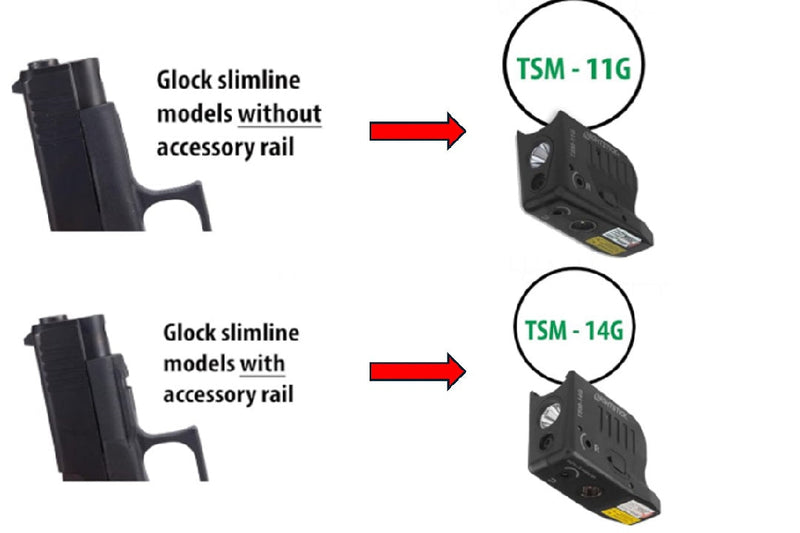
Nightstick's LIGHT FINDER® tool makes the process easier. You can filter by handgun make and model to confirm rail compatibility before buying, helping eliminate guesswork around mounting inserts, switch position, and holster compatibility.
Why Fit Matters
Even a light with excellent beam performance isn't the right choice if it doesn't:
- Fit the firearm's rail correctly
- Work with your preferred holster
- Allow comfortable switch access
- Maintain a secure and reliable fit
Once you've identified a compatible setup, you can compare lumens, candela, beam pattern, size, and runtime with greater confidence. The right combination of performance and fit is what makes a weapon light practical for your specific platform.
Make the Right Choice With Nightstick Weapon Lights
Lumens and candela answer two different questions. Lumens measure total light output, while candela measures beam intensity and how effectively that light projects over distance. Together, they provide a clearer picture of real-world performance and help you choose a light based on your environment, platform, and expected distance.
Nightstick offers weapon lights with different lumen and candela profiles for various applications. Compare these specifications to find the right balance of broad illumination, focused beam performance, runtime, and size.
Are you still deciding which light is right for you? Compare Nightstick's weapon lights, check your firearm and holster compatibility with LIGHT FINDER®, or contact Nightstick for help narrowing down your options.
Frequently Asked Questions (FAQs)
What is a good candela range for a weapon light?
There is no universal candela range. The right level depends on your firearm, environment, expected distance, and beam profile. Compare candela with lumens and beam distance to find a weapon light suited to your specific application.
Is higher candela better for a weapon-mounted light?
Higher candela can improve focused beam intensity and reach, but it isn't automatically better. Consider your typical distances and whether you need a wider beam for close-range illumination or a tighter beam for greater reach.
How many lumens should a weapon light have?
The ideal lumen output depends on how and where you'll use the light. Close-range applications may benefit from broad illumination, while outdoor use may require balancing lumen output with candela for effective beam performance.
Does candela affect weapon light beam distance?
Yes. Candela measures beam intensity and is used to calculate beam distance under the ANSI/PLATO FL1 Standard. Comparing candela with beam distance can help you understand how effectively a light projects over distance.
How do I know if a weapon light will fit my firearm?
Check the firearm's rail configuration and confirm compatibility with your preferred holster. Nightstick's LIGHT FINDER® tool can help you identify compatible weapon lights based on your handgun make and model.
Which is more important: lumens or candela?
Neither is universally more important. Lumens indicate total light output, while candela measures beam intensity and focus. For close-range use, higher lumens can provide broader illumination; at greater distances, higher candela can help maintain a focused and effective beam. Consider both when comparing a weapon light.