

When a threat emerges in the dark, hesitation isn’t an option. Choosing the right weapon light is about clarity, control, and confidence. Properly selected tactical gun lights improve positive identification (PID), target discrimination, and low-light handling. All tailored to your specific tactical use cases.
This post highlights the critical elements of weapon-light selection. You’ll also see how Nightstick builds professional-grade lighting around real input from law enforcement and military users. With LIGHT FINDER , you can confirm rail, adapter, and holster availability options before you purchase, mount, or holster your firearm.
Weapon Lights Performance Metrics that Matter
Choose weapon lights that exceed baseline industry standards:
-
Lumens vs. Candela: Match lumens to scene illumination and candela to PID distance.
-
Beam Pattern: Select flood, throw, or hybrid for CBQ, distance, and mixed tasks.
-
Runtime & Battery: Look for PLATO ANSI FL1 runtime to 10% - 20% output; prefer rechargeable Li-ion for consistent performance, with CR123/AA as backups as available.
-
Thermal Management: Expect output to step down during extended use to prevent heat damage.
-
Durability: Verify recoil resistance, IP rating, impact, and corrosion resistance for field serviceability.
-
Mounting System & Fit: Confirm rail spec (Picatinny/M-LOK) and holster/stock clearance so mounts hold zero and remain safe under recoil.
-
Size, Weight, & Ergonomics: Balance output with handling; excess mass affects balance and draw dynamics.
Nightstick Weapon Lights: Trusted Across Duty and Defense
Nightstick delivers mission-focused illumination engineered for duty, defense, and tactical operations.
-
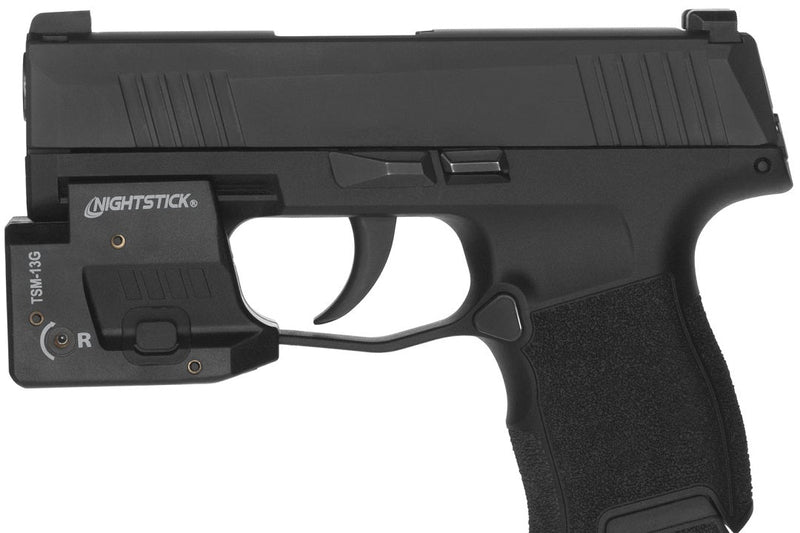
Compact Weapon Lights: Low-profile housings with holster-aware ergonomics and rapid, intuitive controls for consistent draw-and-activate performance.
-
Duty/Patrol Lights: Sustain-output models with remote-switch compatibility and rugged Picatinny/MIL-STD-1913 mounts for routine LE and security use.
-
Light & Laser Combo Units: Class-rated laser with selectable strobe. Note that a tactical gun light with strobe and laser requires proper sighting and training.
-
Backup & Concealed Lights: Slim, low-snag designs for secondaries and covert carry that preserve holster fit and close-quarters usability.
-
Helmet & Headlamp Systems: Hands-free, offset beams with glove-friendly switches for breaching, medical triage, and search tasks.
-
Intrinsically Safe (IS) Models: Certified options for explosive or fuel-rich environments, safety ratings paired with duty-grade ergonomics and runtime.
-
Accessory Kits & Mounts: Quick-detach mounting clips, pressure pads, and adapters for repeatable fit, especially useful when sourcing tactical flashlights.
Common Tactical Scenarios that Demand Illumination
A weapon-mounted light clarifies identification, shapes movement, and supports decision-making under stress.
-
Home Defense: Wide spill and moderate output for room clearing and positive ID without blinding occupants.
-
Law Enforcement: Repeatable mounts and remote controls for reliable activation during long shifts and entries.
-
Tactical & Military Operations: High-candela, long-throw illumination integrated with optics for distance PID.
-
Shotgun CBQ & Backup: Broad near-field beam and recoil-rated clamps to maintain zero under heavy recoil.
-
Concealed Carry & Backup: Low-profile, fast-activation units that preserve holster draw dynamics and retention.
-
Vehicle & Perimeter Assessment: Focused throw for standoff checks; rugged housings for frequent handling and rapid deployment.
-
Search & Rescue: Helmet/ headlamp solutions with long runtime and adjustable beams for extended, hands-free tasks.
Field-Ready Selection: A Step-by-Step Weapon Light Checklist
A structured process ensures your light meets mission demands.
-
Step 1 - Define Your Mission: Home defense, patrol, standoff ID, shotgun CQB, or backup carry.
-
Step 2 - Match Beam & Range: Pick candela/throw and lumen/beam type for your distance and environment.
-
Step 3 - Select Activation & Ergonomics: Tailcap, thumb, or remote pad aligned to your grip, handedness, and trained motor patterns.
-
Step 4 - Verify Fit & Mounting: Confirm rail spec, mount style, and holster/stock clearance to preserve zero and safe draw.
-
Step 5 - Check Runtime & Durability: Review PLATO ANSI-FL1 runtime, duty-cycle, impact, IP, and recoil ratings for reliability.
-
Step 6 - Assess Accessories & Integration: Add lasers, strobes, or IR only when they solve a real tactical need.
-
Step 7 - Validate & Train: Dry-drill, live-fire test, and verify sighting to ensure consistent performance in operational conditions.
Find Your Fit: Nightstick Weapon-Light Recommendations
-
Run LIGHT FINDER to confirm rail specs, adapters, and holster/stock clearance for your exact make/model.
-
Compare specs (lumens, candela, runtime) and remember: match candela to ID distance, not just the biggest number on the box.
-
Fit Before you Fire: Bench-fit mounts, torque to spec, then verify alignment with a short live-fire zero check.
-
Train the Control: Drill your activation method until it’s instinctive.
-
Plan Logistics: Stock spare mounts, batteries, and set a maintenance cadence to prevent downtime.
Need help selecting the right weapon light for your use cases? Contact Nightstick’s support for fitment checks, spec sheets, and mounting guidance before you field a system.