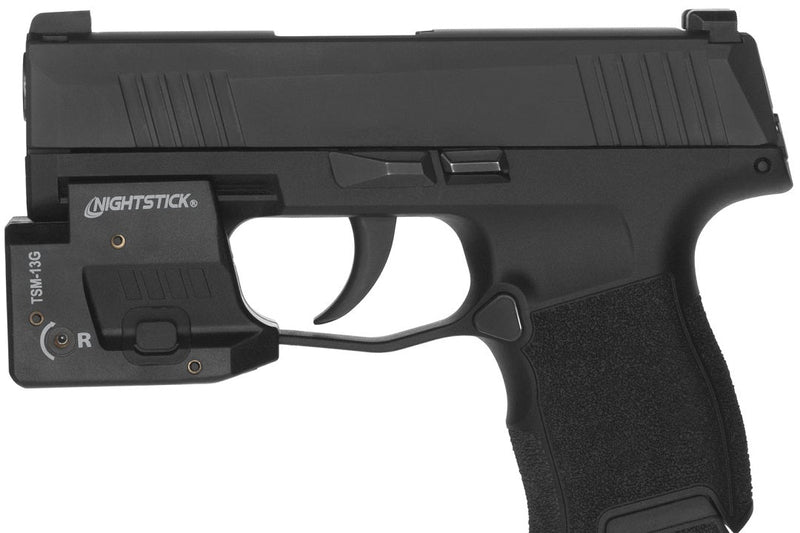


Choosing the right light mounting setup for your firearm includes more than just manufacturer and model preference. Your choice affects reliability, usability, and performance under high-pressure environments. Home defenders, 2A professionals, and trained shooters rely on weapon-mounted lights for PID and threat confirmation. So, it is vital to understand the strengths and trade-offs of different weapon light mounting systems.
Nightstick helps you make an informed decision by suggesting effective illumination products using LIGHT FINDER® . This database search tool enables you to find compatible lights based on your make, model, while providing the optimal modular insert to ensure a perfect fit.
Below is a clear breakdown of today’s most commonly used mounting systems, their strengths and limitations, and their practical implementation scenarios in the real world.
What Are the Most Common Weapon Light Mounting Systems?
Firearms vary, but most mounting methods fall into a few categories. Each weapon interacts differently with ergonomics, recoil, and training habits. Understanding the differences among the various light mounting systems helps users select the right flashlight for their gun.
M-LOK: Is It the Right Choice for Modular and Lightweight Builds?
M-LOK systems have gained popularity due to their secure locking mechanisms and lighter form factor.
Pros
-
Durable recoil: The negative space locking system remains firm when paired with weapon-mounted lights designed to withstand fire.
-
Low profile footprint: Reduced bulk and cleaner rifle lines.
-
Adjustable placement: Enable shooters with cable management, fine-tune ergonomics, and switch platforms.
Cons
-
Lack of compatibility with shotguns: Despite various aftermarket options, the adoption of this system has been slower for some shotgun models.
-
Requires proper torque: Insufficiently tightened hardware can loosen after extended recoil cycling.
M-LOK mounts optimize balance, ergonomics, and weight for defensive carbines.
Picatinny Mounts: Are They Still the Most Reliable Option?
Picatinny rail mounts (MIL-STD-1913) remain the most trusted system in the 2A industry due to their universal compatibility and durability.
Pros
-
Strong lockup: The clamping system resists recoil and maintains zero on combination light/laser units.
-
Universal fit: It works with a wide range of pistols, rifles, and shotguns, making it the most reliable mounting system for cross-platform users.
-
Wide accessory system: Nightstick’s rail-mounted weapon flashlights easily integrate with industry standing mil-spec Picatinny-equipped long guns.
Cons
-
Potential snag points: Raised edges can catch on gear or slings if replacement is not optimized.
-
Bulkier design: Picatinny rails add physical mass compared to KeyMod or M-LOK-based interfaces.
Picatinny is the most reliable system for shooters seeking ruggedness, especially when paired with a Nightstick long gun light .
Offset Rifle Mounts: Are They Useful for Tactical Setups?
Offset mounts position the light slightly to the side of the barrel, which improves switch accessibility and hand placement.
Pros
-
Enhanced sight clearance: Reduces the silhouette interface on certain optics or fixed front sights
-
Better activation control: Ideal for modern thumb-over-bore grips. Allows more natural activations without breaking grip.
-
Flexible placement: Allows flexible positioning where other accessories occupy forward rails.
Cons
-
Slight learning curve: Shooters need to develop consistent muscle memory for activation.
-
Exposure to confined places: Light sits outward, contacting barriers before the muzzle in tight spaces.
Offset setups remain popular among shooters who prioritize speed and ergonomic efficiency.
Pistol-Specific Rails: When Should You Consider These Types of Mounting Systems?
Many modern pistols depend on model-specific mounting interfaces. While selecting a weapon-mounted light pistol setup, consider the following pros and cons.
Pros
-
Holster compatibility: Many holsters are designed for specific pistol light combinations.
-
Tight integration: Offers natural balance and reduces unnecessary overhang.
-
Solid retention: Maintains alignment through rapid slide cycling.
Cons
-
Limited options: Only selected models match the criteria of certain pistols.
-
Minimal interchangeability: A light that fits one handgun may not suit another.
Nightstick enables pistol owners with the LIGHT FINDER®, which filters and verifies correct weapon-mounted light compatibility before buying. On each handgun product page, note the tab titled HOLSTER for industry partners who make Nightstick specific lighting equipped holsters.
Shotgun Clamps: How Do Barrel or Magazine Tube Clamps Perform on Shotguns?
Clamps remain one of the primary mounting solutions for pump and semi-auto shotguns.
Pros
-
Reliable stability: Effective when rail space is limited.
-
Centered illumination: Helps reduce shadowing compared to side-mounted positions.
Cons
-
Adds forward weight: May affect swing speed.
-
Potential movement: Lower-quality clamps can shift under heavy 12-gauge recoil.
Nightstick clamp-compatible lights are designed to withstand shotgun recoil when properly installed.
Which Weapon Light Mounting System Should You Choose?
Each mounting option has various strengths and limitations. However, when selecting a weapon light mounting system, ensure your setup balances durability, ergonomics, and recoil stability.
Whether you're selecting Picatinny, M-LOK, pistol-specific rails, offset mounts, or shotgun clamps, the goal remains consistent: achieving responsible illumination that supports safe operation.
Nightstick simplifies this process with duty-rated lighting and tools like the LIGHT FINDER® , ensuring users can easily align their firearm with the correct illumination platform without guesswork.
Need Help Selecting the Right Weapon Light Mounting System?
Are you evaluating different mounting options for a weapon flashlight or comparing configurations for weapon-mounted lights?
Nightstick's support team can help you navigate model fitment, compatibility, and mounting considerations. Reach out to Nightstick for guidance based on practical industry standards and real-world use cases.