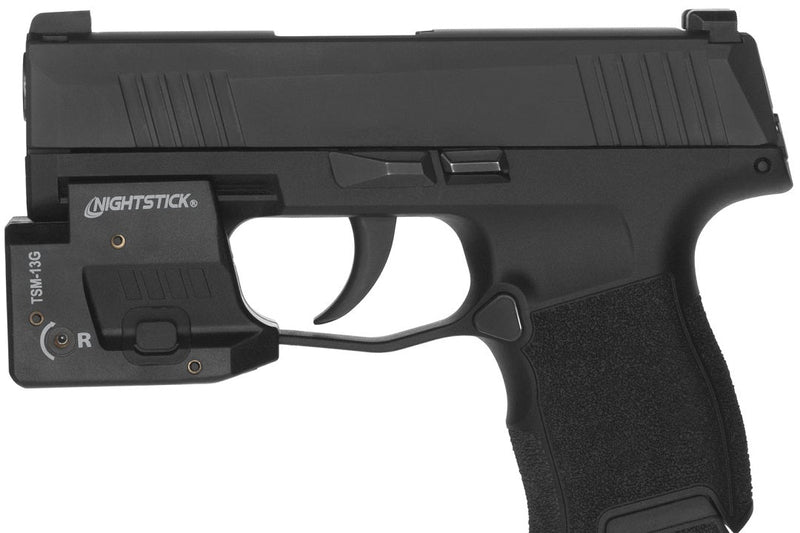


Low-light conditions can significantly affect visibility and situational awareness. In defensive environments, the ability to clearly identify what is in front of you is essential. That is where compact weapon lights become a practical addition to a subcompact pistol setup.
Effective illumination is not just about brightness. It helps users responsibly identify objects, surroundings, and potential threats before making decisions. Many professionals and responsible firearm owners evaluate factors such as durability, ergonomics, and firearm compatibility when selecting lighting equipment. Simply put - light is information!
Nightstick simplifies this process with the LIGHT FINDER® , a tool that helps users quickly locate compatible lighting options, including weapon flashlights based on their specific handgun model.
What are Subcompact Weapon Lights?
Subcompact weapon lights are ultra-compact lighting devices designed for small handguns with short rails. They provide essential illumination for close-range use while maintaining a lightweight, low-profile form ideal for concealed carry setups.
Why Compact Weapon Lights Matter for Subcompact Pistols
Subcompact pistols are widely used for concealed carry due to their smaller size and lighter weight. However, their compact frames also limit the space available for accessories such as weapon-mounted lights.
Selecting the right compact weapon light helps ensure the pistol remains balanced, concealable, and easy to operate while still providing reliable illumination in low-light environments.
Unlike full-size duty pistols, subcompact handguns often feature shorter accessory rails and tighter mounting tolerances. This means not every weapon flashlight will fit properly on a subcompact pistol, making compatibility one of the most important considerations when choosing illumination equipment.
Understanding Platform Compatibility
Handgun rail designs vary across manufacturers and models.
This becomes especially important when working with subcompact pistols, which often feature shorter rails or proprietary mounting interfaces. Because of these design differences, some full-size weapon lights may extend too far beyond the muzzle or fail to mount securely on compact frames.
Common compatibility considerations for subcompact pistols include:
-
Short accessory rails with limited mounting space.
-
Proprietary rail designs are used by certain handgun manufacturers.
-
Trigger guard dimensions that affect light positioning.
-
Compatibility with concealment holsters.
Nightstick’s LIGHT FINDER® helps users quickly identify which lights fit specific handgun models, including many popular subcompact pistols, reducing uncertainty during product selection.
What to Consider When Choosing Compact Weapon Lights
Not every handgun owner requires the same illumination setup. For subcompact pistol users, the goal is to balance illumination performance with size, weight, and concealability.
Common user scenarios include:
-
Concealed Carry: Weapon lights help maintain a manageable carry profile while providing useful illumination when needed.
-
Home Defense: Reliable target identification in confined indoor environments.
-
Professional Training: Durable lighting systems designed for repeated range use and defensive training.
By aligning the light with how the pistol is actually used, shooters can select illumination tools that enhance both safety and practicality.
Key Characteristics of the Best Weapon Lights for Handguns
When evaluating the weapon lights , several performance and design factors should be considered.
Output & Beam Pattern
Brightness ratings provide a general indication of performance, but the beam pattern often determines real-world usability.
For subcompact defensive pistols, illumination is typically used at shorter engagement distances. Because of this, many weapon lights prioritize a balanced beam that provides a clear target identification without excessive glare or washout.
A balanced beam typically includes:
-
A defined hotspot for target illumination
-
Peripheral spill to help maintain situational awareness
-
Optional daylight green laser models
A well-designed weapon flashlight allows the user to illuminate an area without overwhelming the field of view with excessive glare or reflection.
Activation & Switch Design
Controls are one of the most important ergonomic considerations for weapon-mounted lights.
On subcompact pistols, grip space is limited, making intuitive switch placement even more important. Users should be able to activate the light or laser without significantly shifting their firing grip.
Many modern lights feature:
-
Ambidextrous activation paddles
-
Momentary & constant-on functions
-
Switch placement that supports natural grip positions
Nightstick designs its weapon light controls with intuitive switch placement that supports efficient operation.
Durability & Reliability
Weapon-mounted lights must withstand recoil forces, vibration, and environmental exposure. A reliable weapon light should be constructed from durable materials and designed to maintain performance under repeated firing cycles.
Common features include:
-
Aircraft-grade aluminum housings
-
Impact-resistant internal components
-
Waterproof sealing (IP-X7 rating)
-
Secure rail-mount systems
These characteristics help ensure that illumination tools perform consistently during training and operational use.
Compact Weapon Lights for Concealed Carry Pistols
Not every pistol requires a full-size lighting system. For compact and subcompact firearms, weapon lights provide a practical balance between size and output.
These lights are engineered to maintain a low profile while still delivering useful illumination for defensive applications.
Common characteristics of weapon lights include:
-
Reduced overall weight
-
Streamlined mounting systems
-
Compatibility with compact handgun frames
-
Designs that work with concealment-focused holsters
Holster compatibility is particularly important for concealed carry pistols. Many shooters prefer weapon lights that are widely supported by light-bearing holsters, ensuring the firearm can still be carried comfortably and securely.
Many shooters evaluating the best weapon lights for handguns prioritize models that integrate cleanly with everyday carry pistols.
What Performs Well on Subcompact Pistols
Performance in compact weapon lights often comes down to balancing output, runtime, and physical size. Lights designed for subcompact pistols are engineered to deliver sufficient illumination without adding excessive bulk to the firearm.
Well-performing weapon lights typically provide:
-
Reliable illumination suitable for close-range defensive use.
-
Compact housings that do not extend excessively beyond the muzzle.
-
Secure mounting systems designed for smaller accessory rails.
-
Controls that can be operated easily on smaller handgun frames.
These characteristics help ensure the light enhances the firearm’s usability rather than interfering with handling or concealment.
Best Practices for Choosing Compact Weapon Lights
Choosing the right compact weapon light involves more than just picking the highest lumen rating. The right choice depends on how well the light fits your firearm, your environment, and your intended use. Focusing on a few key factors can help you avoid performance issues and ensure reliable operation.
Match the Light to Your Handgun
Ensure the light is compatible with your firearm’s rail system and dimensions. A secure, precise fit is essential for maintaining alignment and consistent performance under recoil. The most popular choice for short-rail subcompact pistols with a narrow rail is the Nightstick TCM-5B or TCM-5B-GL with daylight visible green laser.
Balance Output & Beam Pattern
Be sure to look beyond lumens. A balanced combination of output and beam intensity (candela) provides better visibility, especially for close-to-mid-range target identification.
Consider Size and Carry Comfort
Compact lights should enhance usability, not add unnecessary bulk. Choose a model that maintains your firearm’s balance and works well with your carry setup.
Check Battery Type and Runtime
Understand how long the light will run at usable brightness levels. Efficient power management is important, especially for defensive or duty applications.
Evaluate Switch Design
Controls should be easy to access without adjusting your grip. Ambidextrous or intuitive switch designs improve responsiveness in high-pressure situations.
Verify Holster Compatibility
Make sure your chosen light works with available holsters. Some compact lights are designed to fit widely supported holster configurations.
Prioritize Durability
Choose lights made from rugged materials with proper sealing and recoil resistance. Reliability is critical, especially in demanding or real-world conditions.
Choosing the Right Weapon Light for Your Handgun
Selecting a weapon-mounted light involves evaluating how the tool will be used and how it integrates with the firearm platform. Factors such as beam pattern, switch ergonomics, mounting compatibility, and durability all contribute to overall performance.
For subcompact pistols, the right compact weapon light should provide reliable illumination while preserving the handgun’s concealability and balance.
Nightstick designs illumination tools for law enforcement professionals, firearm instructors, and responsible handgun owners who require dependable lighting equipment.
To simplify the process, use Nightstick’s LIGHT FINDER® to identify compatible lighting options for your handgun. If you have questions about product compatibility, mounting options, or selecting the right illumination system, connect with Nightstick’s support team.