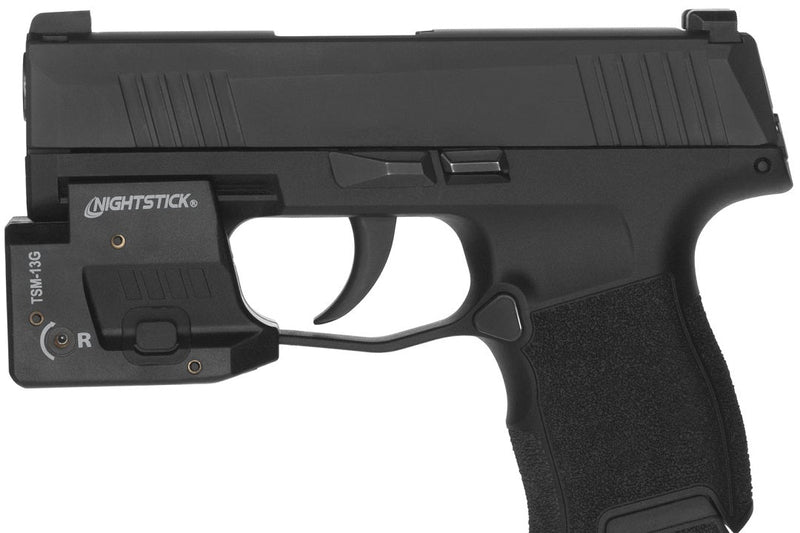


Size matters on a firearm, but not always in the way you might expect. When evaluating compact weapon lights, the relationship between size and performance involves several important engineering trade-offs.
A smaller light keeps your firearm streamlined and easier to maneuver, but it can also influence factors like runtime, heat management, and overall output. Because compact weapon lights use smaller housings, batteries, and optics, size directly affects runtime, beam control, and heat management. Understanding these differences helps you select a light that fits both your platform and your intended use.
To simplify the selection, Nightstick allows 2A buyers to choose the right weapon flashlight using the LIGHT FINDER® tool. All you need to do is enter your weapon’s make and model. The tool quickly identifies the correct light and rail insert combination so you can select the right fit with confidence before you buy.
How Size Influences the Performance of Compact Weapon Lights
Going compact with a weapon light affects a few measurable performance factors. Understanding these differences helps users balance size, illumination, and reliability for their specific firearm setup.
-
Output & Runtime: Smaller housings typically accommodate smaller batteries. The TCM-10-T delivers 1,000 lumens on a single lithium-ion rechargeable battery, providing effective illumination for more defensive distances.
-
Beam Projection: Compact TIR lenses create a focused center hotspot designed for close-to-mid-range positive target identification (PID).
-
Thermal Headroom: Reduced surface area means less space for heat dissipation. Many compact lights rely on regulated output to maintain stable brightness during extended use.
-
Weight & Balance: A compact light adds minimal front-end weight, helping preserve the natural balance and handling characteristics of the firearm.
-
Holster Compatibility: Smaller light profiles are more likely to work with existing holsters or require fewer holster-specific adjustments. Nightstick lists compatible holster manufacturers on each handgun weapon light product page based on established working relationships.
What Makes Compact Weapon Lights Duty-Capable
Duty readiness is not determined by size alone. It depends on engineering, durability, and reliability under real-world conditions. Even weapon lights must meet the same durability standards expected from full-size duty lights.
A dependable weapon flashlight must meet several critical benchmarks to perform consistently in defensive or professional environments.
-
Secure Rail Fit & Lockup: A duty-capable light must mount securely to the firearm’s rail system. Precision rail inserts and locking mechanisms help prevent movement under recoil and maintain consistent alignment.
-
Recoil Survivability: Housings built from aircraft-grade 6061-T6 aluminum with Type III hard anodizing are designed to handle repeated firing cycles without loosening or losing alignment.
-
Switch Accessibility: Nightstick’s dual ambidextrous rear toggle supports both momentary and constant-on activation, allowing users to operate the weapon light without altering their firing grip.
-
Holster Compatibility: The TWM-30 and TCM series follow dimensional standards that work with many duty, OWB, IWB, and AIWB holsters.
-
Environmental Sealing: Waterproof construction and strong impact resistance help ensure reliable performance in demanding field conditions, including law enforcement and professional use.
Nightstick Compact Weapon Lights for Different Handgun Platforms
Selecting the right weapon light depends on your handgun platform, rail design, and intended use. Nightstick engineers the best weapon lights for handguns, ensuring proper fitment, reliable illumination, and balanced performance.
| Title | Image | Description |
|---|---|---|
| SIG P365-Series Pistols | 650 lumens in a compact housing engineered specifically for SIG P365 models. Designed to mount securely to the P365 rail system while maintaining a low-profile setup ideal for concealed carry. | |
| Subcompact Pistols (GLOCK 43X, P365, Hellcat) | 650 lumens, 4,600 candela, and a wide beam angle designed for short-rail platforms where many traditional lights cannot fit. | |
| Compact Carry Pistols | 1,000 lumens with a 317-meter beam distance, user-programmable strobe, and battery-safe mode, all in a lightweight 2.5oz design powered by the included USB rechargeable lithium battery. |
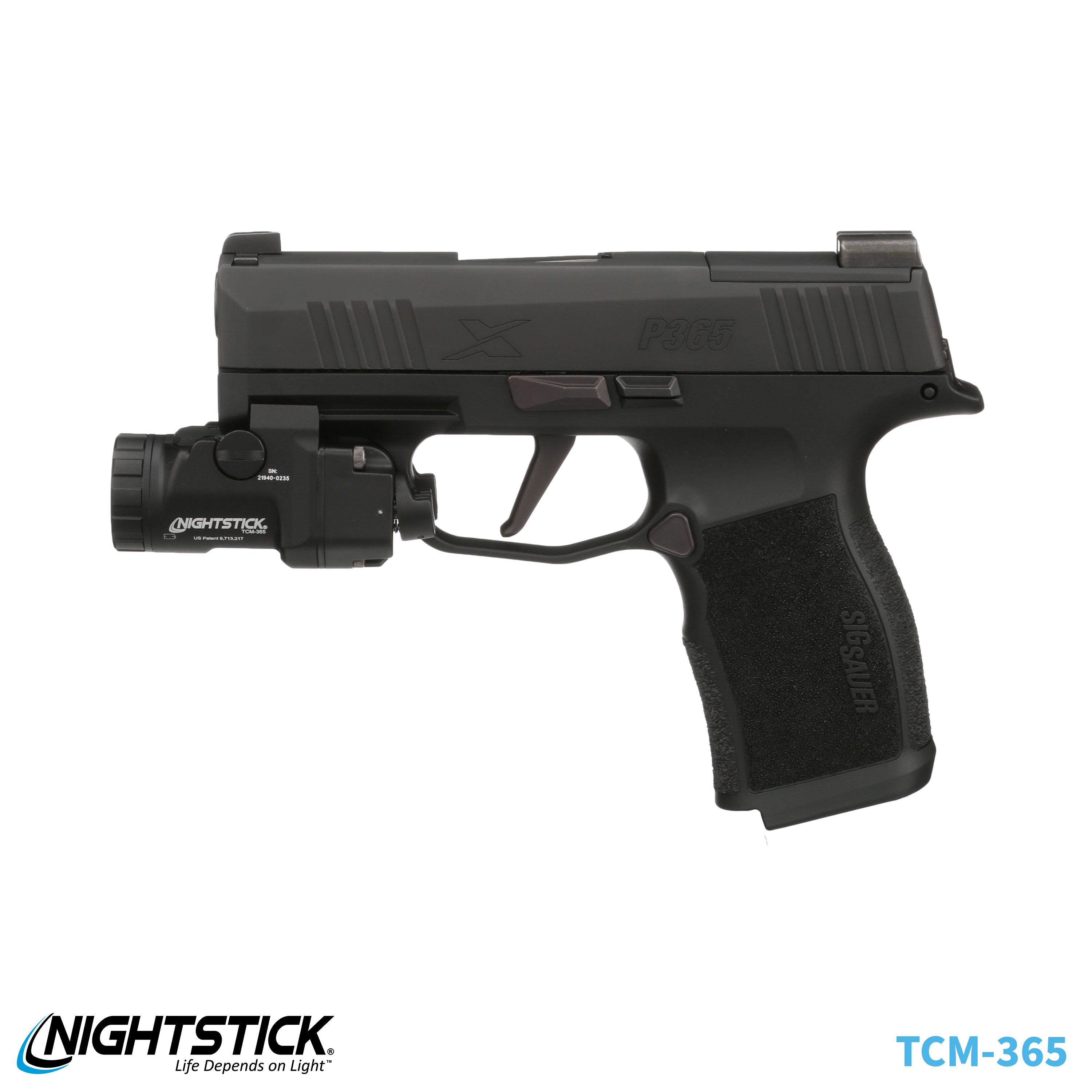
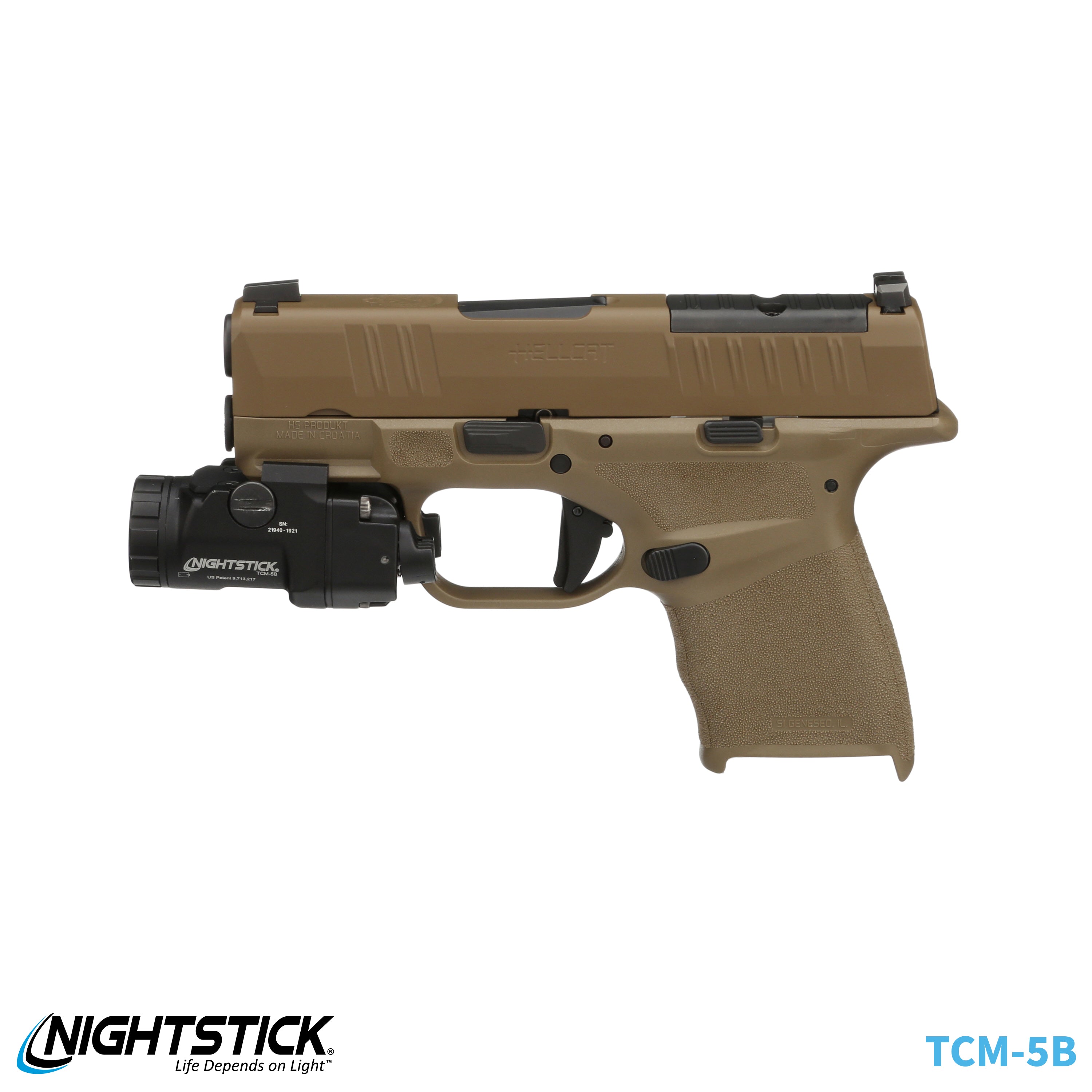

Not sure which option fits your handgun? Use Nightstick’s LIGHT FINDER® tool to quickly confirm compatibility by weapon make and model before purchasing.
Lumens vs. Candela in Compact Weapon Lights
When evaluating weapon flashlights, it is important to understand the difference between lumens and candela. Lumens measure the total amount of light produced, while candela measures how intensely that light is focused in a specific direction.
In compact lights, balancing these two measurements becomes especially important, because smaller optics influence beam concentration and throw distance.
In real-world defensive situations, the balance between the two often matters more than simply choosing the highest output rating.
Inside Structures
In enclosed environments, extremely high lumen output can create backscatter from walls and reflective surfaces. A controlled TIR beam with 550–650 lumens often provides clearer illumination for interior positive target identification (PID).
Patrol & Extended Distances
At longer distances, candela becomes more important than raw lumen output. A higher candela rating produces a tighter hotspot that carries farther, improving identification range in outdoor or patrol scenarios.
Choosing the Right Balance
The most effective weapon light matches the output and beam pattern to the user’s environment. For many defensive applications, a balanced combination of lumens and candela provides better real-world visibility than chasing the highest number on a specification sheet.
Best Practices for Selecting Compact Weapon Lights
A compact weapon light should complement your firearm, not complicate it. The right choice comes down to how well it fits your setup, performs under pressure, and supports your intended use.
-
Proper Fitment: Ensure the light matches your handgun’s rail system and mounts securely. A stable fit prevents movement under recoil and maintains consistent performance. Nightstick offers several rail inserts designed to keep the light switches in the perfect location (outside of trigger guard) on the handgun tactical rail.
-
Output and Beam Pattern: Look for a balance of lumens and candela. A focused beam with controlled spill improves visibility for close-to-mid-range target identification.
-
Size and Weight: A compact light should preserve the firearm’s balance and not add unnecessary bulk, especially for concealed carry.
-
Battery and Runtime: Check how long the light maintains usable brightness. Efficient power use is important for defensive or extended use scenarios.
-
Switch Design: Choose controls that are easy to access without adjusting your grip. Ambidextrous switches improve usability under pressure.
-
Durability: Opt for rugged materials with proper sealing and recoil resistance to ensure dependable performance in demanding conditions.
Choosing the Right Compact Weapon Light for Your Use Case
Different users rely on weapon lights in different ways. Carry style, duty requirements, and training intensity all influence which type of light performs best. Nightstick offers models designed to support various use cases.
-
Law Enforcement/Duty Carry: TCM-10-T and TWM-30 provide reliable output and durable construction for duty use. Battery-safe mode helps prevent accidental activation during transport or long shifts.
-
Concealed Carry (CCW): The Nightstick TCM Series compact handgun lights add minimal weight (about 2.5oz) while delivering practical defensive illumination. TCM-5B also supports narrow-rail subcompact pistols that have limited light options.
-
Competitive Shooting & Training: Recoil-tested housings and ambidextrous controls support consistent performance during high round-count training sessions.
Finding the Right Balance in Compact Weapon Lights
Weapon lights come with real engineering trade-offs, but thoughtful design can minimize those limitations. Rather than simply making full-size lights smaller, Nightstick designs each compact platform around the real-world requirements of modern handguns.
The result is a balance of illumination, durability, and compatibility across concealed carry, duty, and defensive applications.
To ensure the right fit for your firearm, use the LIGHT FINDER® tool to confirm compatibility by weapon make and model. If you need help evaluating specifications, mounting options, or application requirements, the Nightstick support team can help guide you toward the right choice before you buy.
Frequently Asked Questions (FAQs)
Do compact weapon lights provide enough brightness for defensive use?
Yes. Most weapon flashlights produce 500–1200 lumens, which is sufficient for positive target identification (PID) at common defensive distances. Focused TIR optics help concentrate that light into a usable beam for interior and short-range environments.
Does the smaller size of a compact weapon light affect runtime?
Weapon lights typically use smaller batteries, which can influence runtime. However, regulated electronics and efficient LED designs allow modern compact lights to maintain consistent illumination suitable for defensive scenarios.
Are compact weapon lights durable enough for handgun recoil?
Yes, when properly engineered. Quality weapon lights use aircraft-grade aluminum housings, reinforced mounting systems, and recoil-tested electronics to withstand repeated firing cycles on modern handguns.
Can compact weapon lights work for duty use?
Yes, compact weapon lights can support duty use if properly engineered. Models built with durable materials, secure mounting systems, and consistent output can withstand recoil and provide reliable illumination for professional and defensive applications.
How does size affect beam performance in a weapon flashlight?
Size influences the optic and beam shape. Compact lights typically use smaller lenses, producing a more focused beam suited for close-to-mid-range use, while larger lights can generate higher candela for longer-distance illumination.